FREE TIPS FOR ASPIRING AUTHORS
Free Tips for Aspiring Christian Authors
I’ve been blessed to have come in contact with many people whom God
has placed a book inside them. If God gave you the dream to write a
book, know that it’s up to you to birth it out. God can make it happen
for you, but you have to take some necessary steps to help make your
dream become a reality.
The following are some Q&A tips and helpful links for aspiring authors.
What do I do if I don’t have time to write the book?
Like anything, if you want to accomplish something noteworthy you
have to effectively plan for it. Give yourself and write down a
deadline as far as when you plan to have your book finished.
Plan out certain times during the day or during the week that you
will commit to working on your book. Know your ideal writing time,
for early risers like myself, my creative peak is in the morning. I have
yet to write any book at night because I mentally shut down after 9:00 p.m.
However, there are some night owls who write better at night. Know your
best writing time, plan when you will write, and work your plan.
Work around the schedule you already have, and make it a priority if it’s
important to you.
Help, I have writer’s block!
To be honest, as a Christian Author the term, “Writer’s Block” never
escapes my lips (unless I’m telling someone else not to use that
phrase :0) Do not convince yourself that you aren’t in the mood to
write because you have writer’s block. I have a passion for writing,
so honestly I don’t have to be stirred up to write, but even if I don’t feel
like it, I pray before my fingers hit the keyboard, and I just go with the flow.
Never confess that you have writer’s block; if God gave you the book idea,
then He’s not going to “block” you from writing it :0)
Okay, so I’ve written my book, now what?
Now that you’ve written your book, you must decide if you’re going
to self publish, or pursue a publisher for a book deal.
What does it mean to self-publish?
To self-publish means to be the sole person responsible for
making sure everything gets done that is necessary to make
typed pages on a computer or a hand-written manuscript turn
into an actual book. The publisher is the chief investor of the
project. Whether using personal savings, a line of credit, or
borrowing from family and friends, the publisher is the
person who pays for the entire project. Some of the things a
publisher pays for is the editing, book cover, interior layout
design, and the printer.
Also, when you self-publish, you handle the business end of
your book. You are responsible for packaging, marketing,
promoting and selling the book. You secure distribution channels
and deal directly with booksellers, ship the books, create invoices,
maintain inventory, register a business name, handle accounts
receivables and payables.
It is a lot of work and it’s definitely an investment of time and money.
What are some of the things I need in order to successfully self-publish?
* drive and determination
* a good support system
* talent
* faith in God and your God-given abilities
* money
* time
* patience
* good interpersonal skills
* good business acumen (remember this: writing is an art, while publishing is a
business)
* a marketing plan
* a budget
* a teachable spirit
What does it mean to pursue a publisher?
To pursue a publisher means you submit a query letter to a publishing
house (based on their submission guidelines) with hopes that they’ll
respond with interest in publishing your work. If they publish your
work, you won’t have to pay for anything except most marketing costs.
You may also be afforded an advance to have your book
published (which could help with book marketing costs), and once you
make back the advance you get a small percentage of each book sold
(depending upon the terms of your contract).
Do you recommend I self-publish, or pursue a publisher?
That question can only be answered by you. However, I believe initially
self-publishing is a great way to test your product on the market, and if
you book does well in sales, then it may catch the attention of a major
publishing house which may be willing to re-publish your book and
possibly acquire a multiple book deal with them. There are over 100,000
books published every year, so you have to somehow make your book
stand out from the crowd (i.e. catchy title, professional cover, attractive
author photo, endorsements,etc.).
Also, when you initially publish your own book it shows the publishing
house that you are a serious author and if it sells well then you take some
of the risk off that the publisher may have by publishing your book.
This is not to say that authors are not published at all unless they self-publish,
I just encourage self-publishing initially because you learn, hands on, about
the publishing industry. However it is a lot of work, and if you have a problem
making collection calls to retailers and distributors and asking people for money
who haven’t paid you yet, then self-publishing may not be the
thing for you.
Roughly how much does it cost to self-publish?
Like self-publishing guru, Dan Poynter says, Self-publishing is like
buying a car. There’s no one set price; and it’s based on what you’re
willing to pay for each feature. Roughly, to traditionally self-publish it may
cost from $5,000 – $10,000, but technology is now where you can publish
using print-on-demand which can be thousands of dollars
cheaper.
Google: Print-on-demand for a list of print-on-demand companies.
Be sure to read the fine print, and make sure you understand all the
terms of their contract before you decide to do business with them.
Oh, and be sure and compare prices!
Don’t just go with the first thing you see!
Instead of paying all that money to self-publish, why don’t I just go with a publisher?
* If your book sells well, you could make more profit by self-publishing.
For example, you may receive up to 10% for each book sold if you go
with a publisher, however you could make 40-50% of each book sold
if you self-publish and sell your book at a discount to distributors, or
100% profit when you sell to people in person.
* If a publisher accepts your work, it could take another 1-2 years
before it hits the market.
* You have no control over the cover, and they may want to
change some of your content.
When you self-publish, you have total and complete control
and there’s also tax benefits because as a self-published author you
have your own business – your product is your book.
Side Note: To be honest, self-publishing is not for everyone.
There’s a saying that the easy part is writing your book. Once you write it,
then you have to promote and sell it. You have to have a target audience,
a marketing plan, and a platform or a message you want to give to the world,
and you have to be consistent, persistent, and creative in your
marketing efforts.
Okay, so I’ve written my book and I decided to self-publish. Besides prayer and confessing
that the favor of God is on me and this book, what do I need to get my book “out there.”
* Well, in order to get your book “out there” you need to be “out there”
(wherever “out there” is :0) The following are tips to get out there:
* Join a local writer’s group. For those in the Detroit area, I’m a member of
American Christian Writers/Detroit Chapter. Visit http://www.facebook.com/acwdetroit for detailed info.
More free tips can be found on the website of my PR Coach and mentor, Pam Perry. www.PamPerryPrCoach.com and MinistryMarketingSolutions.Blogspot.com
* If you don’t have a local writer’s group, join online communities of other writers. A great example is http://www.chocolatepagesnetwork.com
* Attend annual writer’s conferences and let everyone you encounter come to
know you and your book. Take your book, postcards, and business cards with
you everywhere (and make sure everything you present is done in excellence,
because you’re representing the God you serve and yourself) Don’t be shy.
Be like John the Baptist in the wilderness, don’t be ashamed to tell everybody
about the book that God birthed through you. It just may be the encouraging
word that other person needs, and it just may change their life!
Highly Recommended Reading:
The Self-Publishing Manual by Dan Poynter -
Get and read this book FIRST, even if you hadn’t finished writing your book yet.
It’ll help you decide whether or not you want to self-publish or pursue a publisher,
and if you self-publish it tells you everything you need to do, and in what order,
in order to self-publish. I used this book when I initially self-published my first
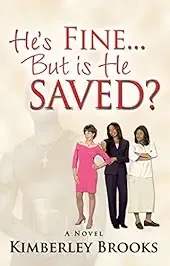
novel, He’s Fine…But is He Saved? before I acquired a five-figure two-book deal with Kimani
Press, which is an imprint of Harlequin Books – one of the largest publishers of
women’s fiction. *** This book is a MUST READ for every aspiring and new author *** If you’re serious about writing, click the following link to purchase this book today:
Christian Writer’s Market Guide by Sally Stuart -
Updated annually, this book, known as the “Bible of the Book Publishing
World,” lists all Christian publishers, agents, and magazines who are
looking for submissions and it also gives their submission guidelines.
Follow the suggested guidelines to the letter.
Synergy Energy: How to Use the Power of Partnerships to Market Your Book, Grow Your
Business, and Brand Your Ministry by Pam Perry, Anthony Obey, and Crystal Obey-
This book is chalk full of informative, inspirational articles for aspiring authors
and business owners targeting the African-American Christian market.
For free tips also visit www.PamPerryPrCoach.com and
www.ministrymarketingsolutions.blogspot.com Pam really knows her stuff
and is the publicist God used to help launch my writing career! My
saying for her is that every Christian writer should, “Know Jesus – and
know Pam!”
Be The Media by David Mathison
In today’s “techy” age, there are tons of opportunities for authors to save
money by marketing and promoting their books themselves, and with
millions of people and potential readers online daily, now is the best
time to learn how to maximize online marketing tools. Instead of waiting
for the media to feature you, it’s time for you to ‘Be
the Media!’
This book is available EXCLUSIVELY on their website http://www.bethemedia.com
1001 Ways To Market Your Book by John Kremer – though
this book can be a bit overwhelming at first, he has some good nuggets and
marketing ideas.
If you aren’t able to purchase his book just yet, at least sign up for his
eNewsletter for free tips to authors on www.JohnKremer.net
All of these books can be purchased online today through this website.
Add these resources to your library, and you’ll be well on your way to
major success in your writing career!